Five Easy Steps by Richard Jackson Summary
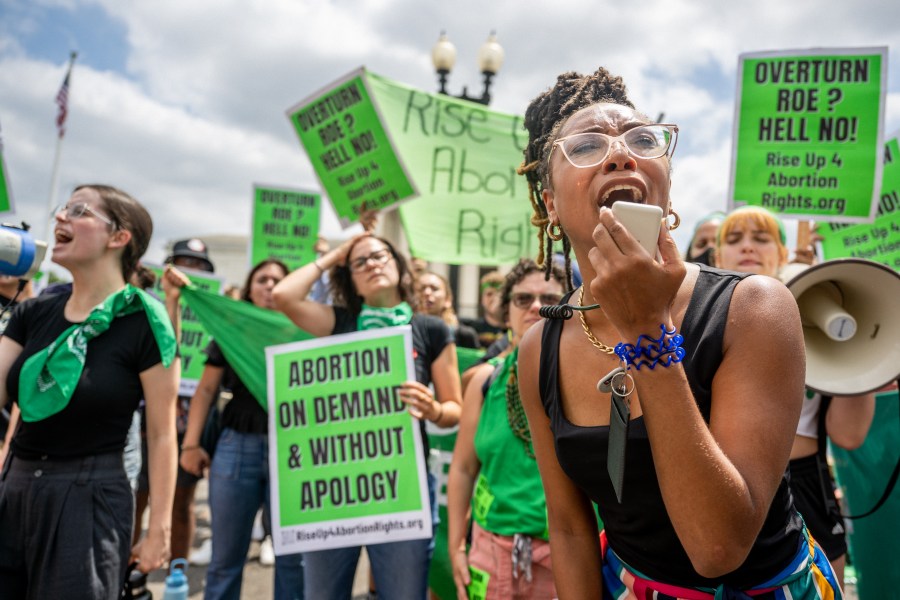
On June 24, 2022, the Supreme Court of the United States (SCOTUS) ruled in the case Dobbs v. Jackson Women's Wellness Arrangement, overturning Roe v Wade in an expected, withal still highly contentious ruling. The ruling closely resembles the draft opinion, leaked on May 2, 2022, in an unprecedented plough of events. The draft stance signaled that at least four of the conservative justices would vote to overturn the landmark legislation that banned states from passing legislation that restricted a person's right to ballgame. Indeed, Justices Alito, Gorsuch, Kavanaugh and Barrett voted to overturn the correct to ballgame previously protected past Roe v. Wade. Chief Justice John Roberts voted with the majority, but wrote that he would have supported upholding the Mississippi ban (more on that afterward) without fully overturning Roe.
Since the passage of Roe v. Wade in 1973, Americans have come to see the correct to ballgame every bit constitutionally protected. Popular support for abortion has fluctuated over the years, but polling from 2021 shows that 80% of Americans support abortion at least under some circumstances. Even so, ballgame has been a culture state of war topic for years, and the passage of Roe never stopped politicians from edifice platforms around problems such as defunding Planned Parenthood and other ballgame providers.
In the final decade, several states accept enacted increasingly severe ballgame restrictions, with 2021 seeing a record amount of anti-abortion legislation, all aimed at overturning Roe v Wade. On December 1, 2021, ane of these pieces of legislation, Dobbs v. Jackson, was taken up by the Supreme Court.
At the eye of Dobbs v. Jackson is the Gestational Age Act, which bans all abortions after the 15th calendar week of pregnancy – save for life-threatening emergencies and abnormalities. The Jackson Women's Wellness Organization argued that this act was unconstitutional, prompting Mississippi Land Health Officer Thomas Dobbs to refute Jackson's claim. The Supreme Court presided over their argument on Dec i, 2021. To better empathize how we got here, we're taking a expect at the history of the reproductive rights motility to the present.
The Early History of Reproductive Rights
When Roe 5. Wade made its way to the Supreme Court, the battle for reproductive rights was non new. Some of the earliest American ballgame regulations formed in the 1820s and '30s, mainly stemming from the fact that ballgame methods at the time were accounted dangerous.
By the 1850s, the American Medical Association began to call for the de-legalization of all abortions — except for cases in which a pregnant person's life was at gamble. The alleged motive behind this decision was to ensure that the offspring of immigrants or lower-class folks didn't outnumber the offspring of upper-class folks. That controversial discourse was oftentimes accompanied past appeals to religious morality.
Within but a few decades, abortion was illegal in much of the United states of america. That didn't cease doctors in the 1880s from performing these procedures, nor did it cease people with uteruses from needing them. However, safe abortions were largely available exclusively to upper-class, white people; other people seeking reproductive assistance were forced to resort to dangerous, "back-alley" methods, which were plagued past tremendous health risks and legal complications.
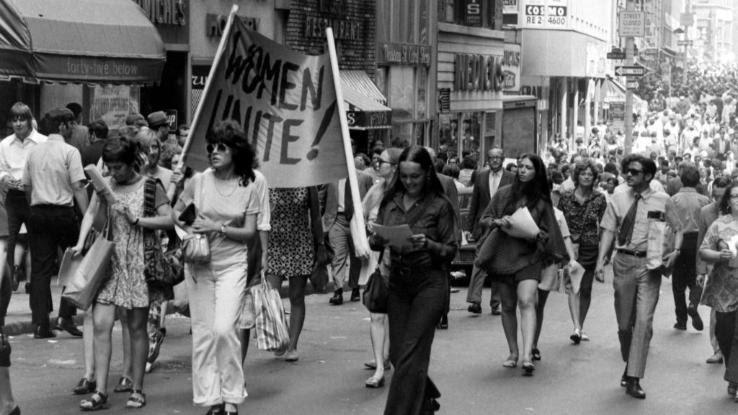
During the late 1950s and early on '60s, women'due south rights groups — equally well every bit groups similar the American Constabulary Plant — began to phone call for laws that allowed people with uteruses, regardless of their race or class, equal access to rubber abortion services (explicit trans-inclusive stances had not all the same adopted past the motion, which largely understood itself to be advocating for cisgender women).
In 1970, Hawaii became the starting time state to legalize abortion for its residents, while New York state started offering legalized, safe abortions for anyone in need. When Roe five. Wade made its way to the Supreme Courtroom in 1973, other states, like Alaska and Washington, had followed Hawaii and New York's lead.
The Story Behind Roe v. Wade
The instance we now know as Roe v. Wade first began in 1970: A woman named Norma McCorvey, referred to as "Jane Roe" in court documents to protect her privacy, filed a lawsuit against Henry Wade, the district attorney of Dallas County, Texas at the time.
What made McCorvey file that lawsuit? A new Texas police force made ballgame outright illegal unless the woman'south life was at risk. Having grown upwards poor, McCorvey had already given up 2 children for adoption. She concluded up doing the same with a third kid, namely because she didn't take the money to pay a doctor for an ballgame or travel to a place where they were legal.
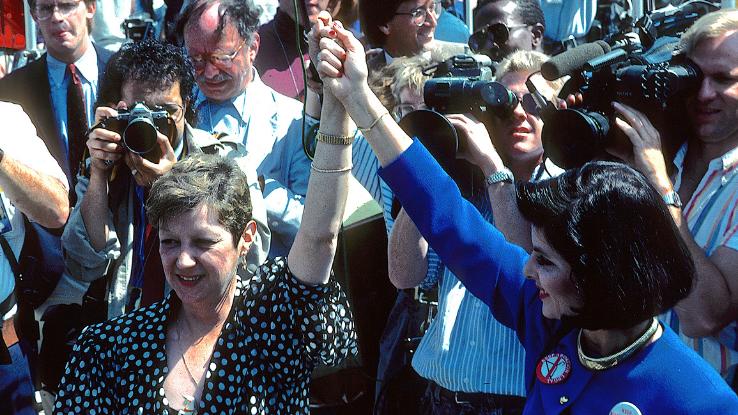
The criminalization of abortion would unduly bear on impoverished people similar McCorvey, likewise as people of color. In June of 1970, the instance reached the Texas District Courtroom. The courtroom did rule that the country's abortion ban was unconstitutional, but it refused to file an injunction. Neither Roe nor Wade was satisfied with this outcome, then both parties appealed the case to the Supreme Court, which agreed to hear information technology in 1971.
The Roe v. Wade Ruling
The Supreme Court made its ruling on Roe five. Wade on January 22, 1973. In a 7-2 conclusion, the court voted to strike down the Texas abortion ban, which prevented states across the country from outright banning pregnancy termination procedures. Generally, the courtroom's decision fabricated abortion services safe and more accessible to individuals throughout the country. According to Planned Parenthood, "the conclusion also set a legal precedent that affected more than 30 subsequent Supreme Court cases involving restrictions on access to abortion."
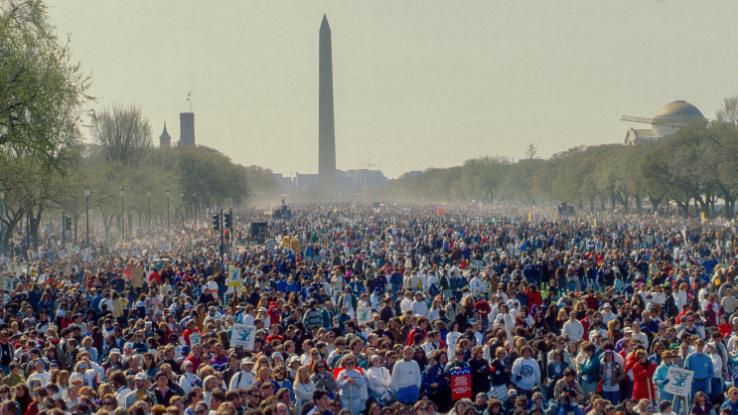
Withal, despite ruling in favor of Roe, the court did try to discover some middle ground. As such, the court outlined a ruling that divided pregnancy into three trimesters. During the first trimester, they decreed that a person should have the choice to stop their pregnancy; for the second trimester, states could regulate abortions, and so long as they didn't ban them entirely; and, during the 3rd trimester, the court ruled that states maintained the right to prohibit late-term abortions — unless the pregnant person's life was in jeopardy.
This landmark ruling faced tremendous backlash from staunch opponents of abortion. For the adjacent 3 decades, the Supreme Court ruled on a series of cases that severely restricted ballgame access for depression-income people by upholding country and federal bans on funding for abortions and requiring that young people obtain parental consent (or notify their parents) before accessing abortion services.
How Do Roe v. Wade & Planned Parenthood v. Casey Relate to Dobbs v. Jackson?
In 1992, the Supreme Courtroom'southward bourgeois bulk led many pro-choice advocates to fear Roe v. Wade would exist overturned, particularly when the court ruled on cases like Planned Parenthood of Southeastern Pennsylvania v. Casey. Although the cadre tenant of Roe was upheld during this time — that "the constitutionally protected right to privacy includes every [person's] right to make [their] ain personal medical decisions" — the rulings still created more obstacles and restrictions for those seeking legal and prophylactic abortions.
Nevertheless, abortion rights were upheld in the wake of Planned Parenthood v. Casey. The Supreme Court cited stare decisis (the practice of continuing by previous court decisions despite dissenting opinions) every bit its main reason for permitting abortions in America, admitting with a modified trimester program. Justices Sandra O'Connor, Anthony Kennedy, and David Souter (who were all appointed by Republican presidents) refused to overturn Roe v. Wade in 1992, with O'Connor contributing the "undue burden" statement that is oft echoed past many pro-choice advocates.
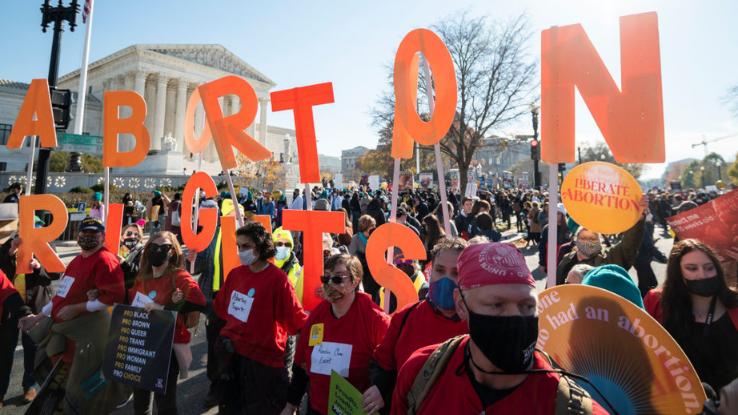
However, the Dec i, 2021,Dobbs v. JacksonSupreme Court hearing again highlighted how precarious the correct to abortion even so is in America. Mississippi Solicitor General Scott Stewart outright said that "Roe five. Wade and Planned Parenthood v. Casey haunt our country", and that both cases have "damaged the democratic process." According to Stewart, he seeks to overturnRoe v. Wade (and Planned Parenthood v. Casey, by extension), then that abortion rights tin exist decided on a state-by-state footing.
Julie Rikelman, the Senior Director of the Middle for Reproductive Rights, argued on behalf of the Jackson Women'due south Health Organization. Rikelman sought to uphold Roe v. Wade, and to illustrate why a fifteen-calendar week ban on abortion "is flatly unconstitutional under decades of precedent." Put simply, fetal viability occurs during the 24th calendar week of pregnancy. Moving the viability line upwardly to the 15-week mark ignores the precedents set by Roe 5. Wade and Planned Parenthood v. Casey. Rikelman also worries that adjusting the viability line will encourage states to "ban abortion at nigh any point in pregnancy."
Details like fetal viability were pivotal to deciding the outcomes of Roe v. Wade and Planned Parenthood five. Casey. When the Supreme Court ruled 7-2 in favor of linking abortion with a adult female'southward correct to privacy, their decision came with several caveats — namely, the trimester framework that we previously mentioned. The justices of the Supreme Court spent endless hours discussing this framework too every bit the ethics behind abortion. When Justice Harry Blackmun drafted the bulk decision, he only did so after confirming that fetal viability specifically occurs during the third trimester of pregnancy.
Dobbs 5. Jackson Has Ushered Us Into a Mail service-Roe America
The Supreme Courtroom determined the issue of Roe v. Wade in 1973, and it was the but entity that could formally overrule that decision. Neither governors nor presidents could overrule this case on a whim, though the power of the President to influence the political mural through court appointments, long afterwards their term has ended, has come up into sharp focus.
The timing of this case, and the ramped-up legislative efforts to restrict abortions around the country, is no coincidence. Since the appointment of three conservative justices to the court by former President Trump, anti-option advocates and politicians take made fast moves to put in place laws that they believed would be upheld by this Supreme Court ruling. All of this happened despite several of these justices bodacious members of Congress that they believed Roe to exist "settled law".
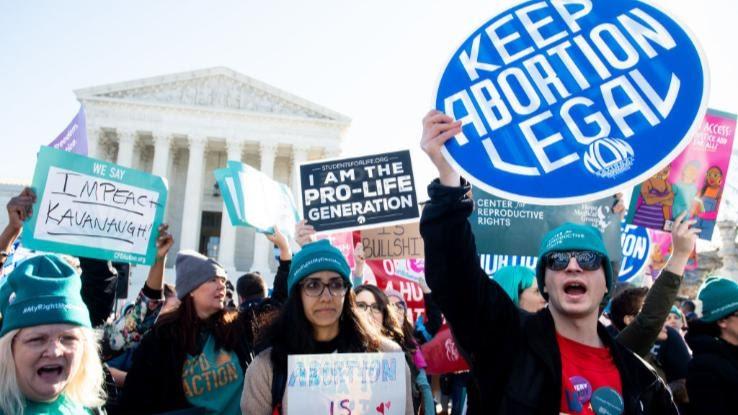
The outcome of this ruling will have firsthand furnishings on states with so-called "trigger laws." 13 states had laws preemptively put in place in anticipation of this ruling, and those states will run across abortion rights overturned in the next 30 days. These states include Arkansas, Idaho, Kentucky, Louisiana, Mississippi, Missouri, Northward Dakota, Oklahoma, South Dakota, Tennessee, Texas, Utah, and Wyoming. In response, states like California are working on legislation that would transform these states into ballgame sanctuaries for individuals who need assistance.
The weeks ahead are sure to meet protestation movements and political organizing to protect abortion access as well equally a slew of other rights that have been called into question at this moment, and the power of protest should not be disavowed.
Source: https://www.ask.com/news/roe-v-wade-history?utm_content=params%3Ao%3D740004%26ad%3DdirN%26qo%3DserpIndex&ueid=266c4ecb-1720-44d6-9d75-44cc174a6a21
0 Response to "Five Easy Steps by Richard Jackson Summary"
Post a Comment